Intermediate interview questions in Agile & Scrum, page 8

How would you create a probabilistic forecast for a backlog?
This tests your grasp of probabilistic forecasting over single-date estimates. A good answer explains using historical throughput to run a Monte Carlo simulation, then presenting a range of dates with confidence levels (e.g., 50%, 85%).
What is SAFe's Architectural Runway and how do engineers maintain it?
Tests balancing emergent design with intentional architecture at scale. Runway is existing code and infrastructure for near-term features; engineers contribute via enablers, refactoring, standards, and spikes.
What is SAFe's Architectural Runway and how do you build it?
This tests your grasp of balancing proactive technical investment with agile delivery. Define it as the code and infrastructure for near-term features, built via 'Enabler' stories. The red flag is describing it as a rigid, big design up-front (BDUF) plan.
What is an Architectural Runway and how do you maintain it?
Tests balancing intentional architecture with emergent design in SAFe. Define it as the tech foundation for near-term features, built via Enabler stories. You contribute by identifying and implementing these enablers.
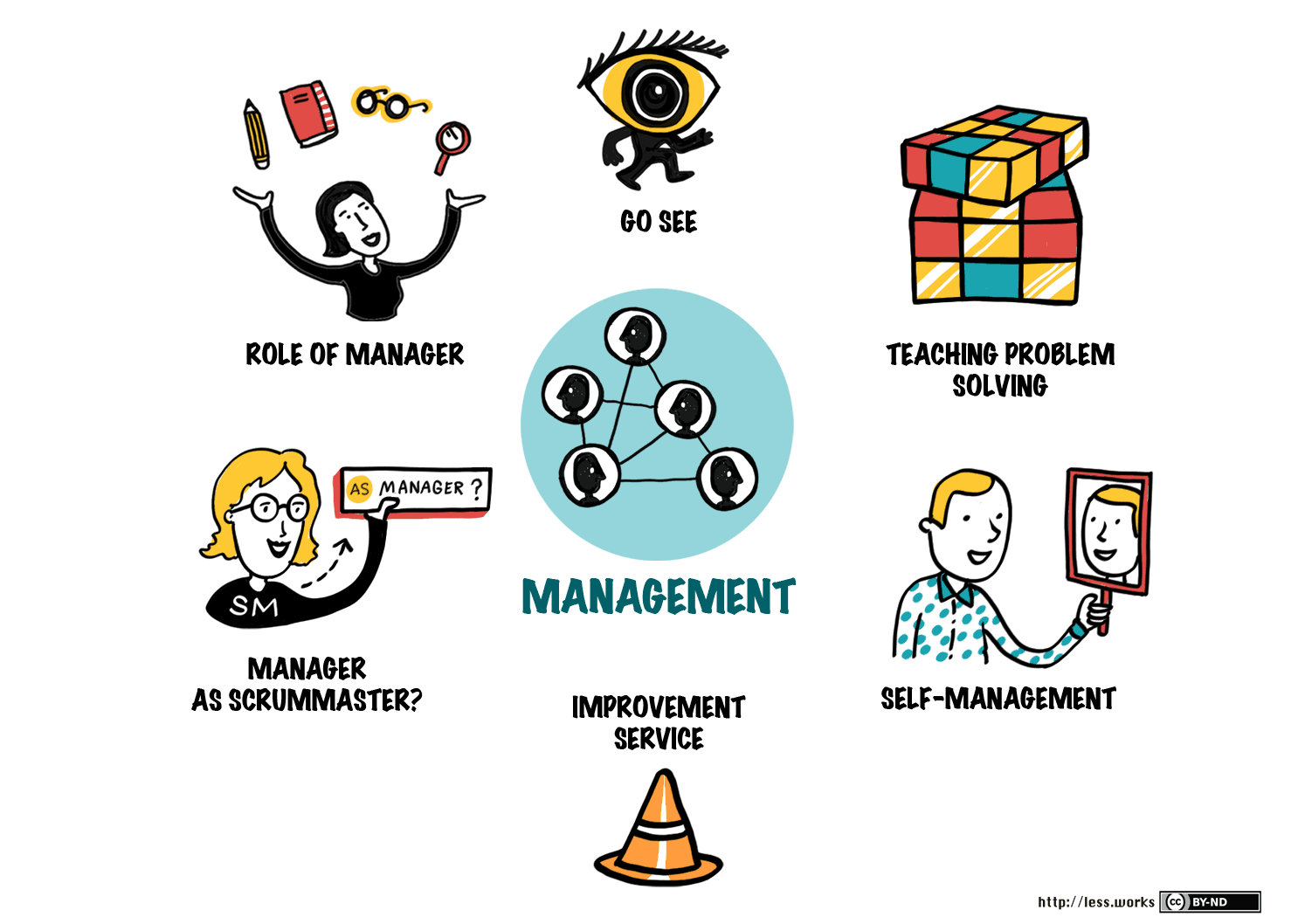
How does management evolve in scaled agile versus traditional program management?
This tests whether you see scaled agile shifting management from command to enablement. A strong answer contrasts LeSS manager-as-teacher supporting self-managing teams against traditional program-management command structures.
How does management's role evolve in scaled agile frameworks like LeSS?
This tests your grasp of modern agile management, moving from command-and-control to enabling teams. Contrast Theory X (directing) with Theory Y (coaching). In LeSS, managers improve the system and teach, not assign tasks.
How Management's Role Evolves When Scaling Agile
This tests your grasp of servant leadership vs. command-and-control. A good answer contrasts traditional managers (directing work) with enabling managers (removing impediments, teaching problem-solving) as seen in LeSS.
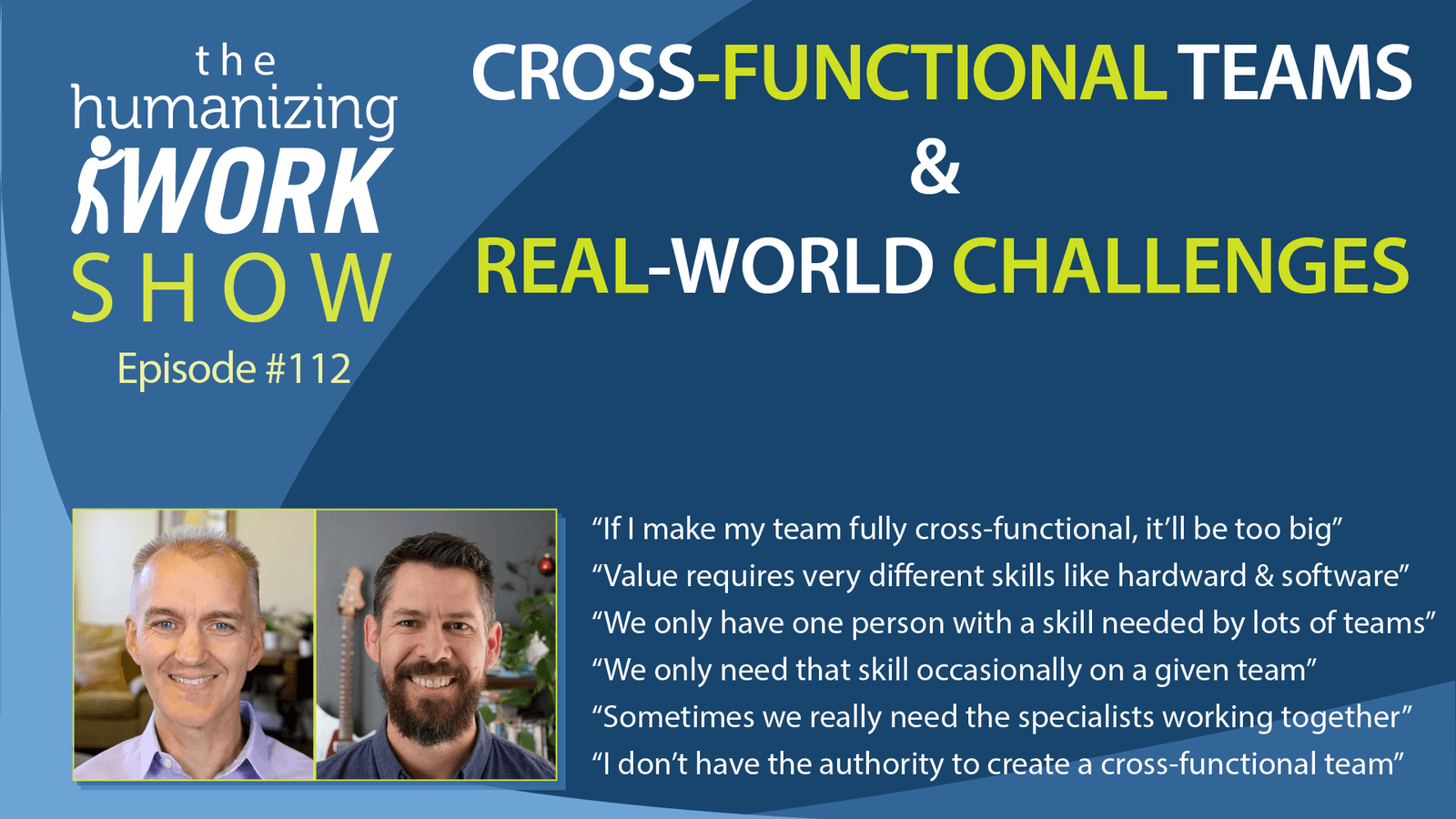
What technical and process challenges appear when forming cross-functional product teams?
Tests whether you see cross-functional integration as dissolving handoffs, not renaming teams. Strong answers mention testing in CI/CD, collective estimation, and social friction. Weak answers treat it as a staffing reshuffle that keeps siloed workflows.
Challenges of transitioning to cross-functional teams
Tests your experience with real-world agile transitions. A good answer covers process friction (new roles), technical gaps (tooling, T-shaped skills), and cultural shifts. A red flag is blaming other roles or giving textbook-only agile answers.
Challenges of Transitioning to Cross-Functional Teams?
This tests your grasp of the friction in agile transitions. A good answer covers skill gaps requiring cross-training, new process demands like CI/CD ownership, and ambiguity over responsibilities like on-call.

How does an engineering manager's role change moving to agile autonomous teams?
Tests understanding of shifting from command-and-control to coaching and enabling teams. Strong answers cite three domains: team coaching, value investment, and environment shaping, plus servant leadership.
How does an EM's role change in an agile model?
This tests your grasp of servant leadership. A great answer outlines the shift from directing work to building team capability through coaching, removing systemic impediments, and managing the team's environment.
How does an EM's role change in an agile model?
This tests your grasp of servant leadership. A great answer explains the shift from directing work to enabling teams by building capabilities, removing impediments, and managing boundaries.
Which Scrum event best diagnoses systemic failure to deliver a usable Increment?
Tests whether you distinguish process inspection from product inspection. Answer: Sprint Retrospective, because it plans quality and effectiveness improvements and adapts the Definition of Done. Red flag: naming Sprint Review or calling it a blame session.
Which Scrum event fixes consistently failed Sprints?
Tests your grasp of Scrum's empirical process control. A great answer identifies the Sprint Retrospective as the event for inspecting the *process*, not just the product. It contrasts this with the Sprint Review.
Which Scrum event is most critical for a failing team?
This tests your grasp of Scrum's empirical process. A great answer champions the Sprint Retrospective for team self-inspection and process adaptation. A red flag is blaming a role or picking an event without justifying it based on Scrum principles.

How do blockers and impediments differ, and when do you escalate?
It tests whether you separate immediate task stops from chronic drag. Blockers are red-light stops for swarming; impediments are velocity drains surfaced in retrospectives and escalated with data.
Blocker vs. Impediment: How do you escalate an impediment?
This tests your proactivity in removing systemic friction. Define a blocker (full stop) vs. an impediment (drag). Explain how you surface impediments in retros, track them in a backlog, and escalate systemic issues to leadership.
Blocker vs. Impediment: Definitions and Escalation
Tests your grasp of Scrum terms and escalation. A blocker stops work; an impediment slows it. A good answer defines both, then outlines an escalation path for impediments: visualize, quantify impact, and engage leadership.
How do you handle NFRs in the backlog and make them visible?
Write NFRs as measurable backlog items with acceptance criteria; embed in Definition of Done; decompose into tasks; automate validation.
We are hiring for this. Every open role lists the topics its interview covers, so you can prepare for the real thing rather than guessing.
See open roles