More in Product Management — page 55

Repositioning: Changing Minds, Not Just Products
Repositioning changes how customers perceive your existing product. Netflix did this by moving from DVDs to streaming to meet new demand. Don't mistake it for rebranding—repositioning alters the core promise, not just the logo or colors.
Category Design: Don't Compete, Create the Game
Instead of fighting for a slice of the pie, bake a new one. Category design creates a new market you can dominate, rather than competing in an existing one. The footgun is thinking a new feature makes a new category; it requires teaching the market.
Brand Positioning: Owning a Spot in Your Customer's Mind
Brand positioning is about owning a specific idea in your customer's mind. It's achieved through product differentiation and advertising to make your brand the default answer for a specific need, like Volvo for 'safety.'

Strategic Intent: Winning with Resourcefulness, Not Resources
Strategic Intent is a long-term goal that outstrips your current resources, forcing resourcefulness. Instead of matching resources to opportunities, you set an ambitious target like 'Beat Xerox' and rally the organization to close the gap.
Working Backwards: Start with the Press Release
Start product development by writing the press release for its launch. This forces you to define the customer benefit first, ensuring a new idea is customer-obsessed before you build. The footgun is starting with tech capabilities, not customer needs.
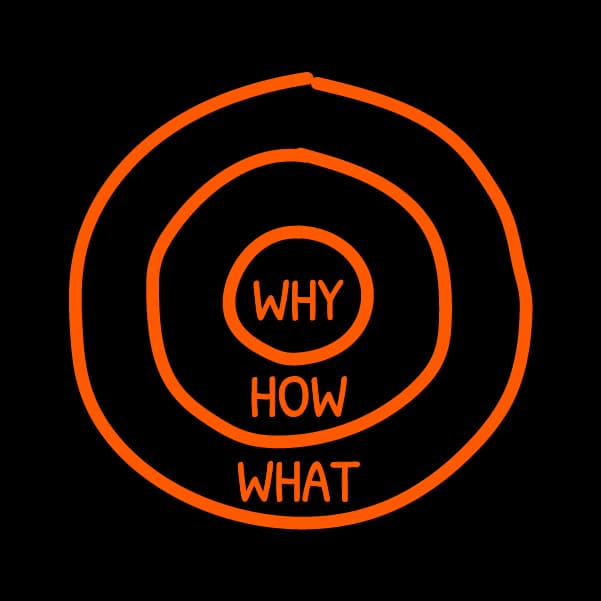
The Golden Circle: Leading with Why
The Golden Circle is a framework for inspiring action by communicating from the inside out: starting with your purpose (Why), then your process (How), and finally your product (What). It's used to build loyalty by connecting on belief, not just features.
Principle of Charity: Argue the Strongest Case
The Principle of Charity means engaging with the strongest possible version of a colleague's argument, not the weakest. Use it in design reviews to find the best idea, not just to win the debate. The footgun is straw-manning an idea to easily knock it down.
Executive Presence: The Ability to Inspire Confidence
Executive presence is the ability to inspire confidence in your team, peers, and superiors. It's the 'X-factor' that gets you chosen for senior roles and high-stakes projects.
Principled Negotiation: Focus on Interests, Not Positions
Principled negotiation avoids a battle of wills by focusing on shared interests, not rigid positions. It's a method for finding mutually acceptable agreements in conflicts. Use it in business deals or team disagreements.
Force-Field Analysis: Map the Tug-of-War of Change
Force-Field Analysis visualizes a decision by mapping 'driving forces' (pros) against 'restraining forces' (cons). Use it to gauge the viability of a change, like a new project. The main footgun is listing forces without scoring their relative strengths.
Strategic Narrative: Your Company's Source Code for Story
A strategic narrative is the source code for your company's story, defining its unique value. It's the blueprint for marketing, sales, and internal decisions, ensuring everyone tells the same story.
Managing Up: Be the Co-Pilot, Not Just a Passenger
Managing up isn't flattery; it's making your manager more effective by aligning your work with their goals. This is key for getting projects resourced and ensuring your priorities align with the organization's, preventing wasted effort.
Stakeholder Communication Plan: Who Gets Told What, and When
A stakeholder communication plan is a roadmap for who needs to know what, when, and how. It's used to keep executives, dependent teams, and users aligned on project progress. The biggest footgun is a one-size-fits-all approach; tailor updates to each group.
Trust and Safety: The Immune System of Online Platforms
Trust and Safety is an online platform's immune system, protecting users from harmful content, abuse, and fraud. It's critical for moderating social media and preventing e-commerce scams.

Platform Strategy: Solving the Chicken-and-Egg Problem
A platform isn't a product; it's an environment where groups create value for each other. This strategy is key for marketplaces (Uber) or ecosystems (iOS) where value grows with users.
Platform Envelopment: Eat or Be Eaten
Platform envelopment is when a large platform absorbs a competitor's market by bundling its core features, often for free. This is common in tech, like an OS adding a feature that makes a standalone app obsolete.
Developer Evangelism: Building a Movement for Your Tech
Developer evangelism builds a movement for a technology, aiming to make it a standard through network effects. It's used to drive adoption for new platforms, APIs, or frameworks by inspiring developers, not just selling to them.
SDKs: A Strategy to Make Your Platform the Default
An SDK is a strategic tool to drive adoption. By bundling compilers and frameworks, you make it easy for developers to build for your platform or integrate your service, making your ecosystem the path of least resistance.
Open vs. Closed Platforms: Walled Garden or Public Park?
An open platform is a public park, inviting others to build on it; a closed one is a walled garden with total control. This choice defines growth: via a third-party ecosystem (Android) or tight integration (Apple).

API-as-a-Product: Your API Is Your Business
Treat your API as a core product with developers as your customers, not just a technical integration. This mindset is crucial when exposing data to partners or building a developer ecosystem, like Stripe or Twilio do.