All bites
The whole library, newest first. Filter by what you are here for, or pick a topic if you already know.
4330 bites
Page 181
What is the purpose of a WIP limit in Kanban?
Tests understanding of Kanban flow optimization. A good answer explains that WIP limits force task completion, which improves flow, reduces context switching, and exposes bottlenecks. A red flag is describing it only as a way to prevent team burnout.
Purpose and Consequences of Kanban WIP Limits
Tests your grasp of flow efficiency. A good answer defines WIP limits as a tool to manage system flow, expose bottlenecks, and create a pull system, then links ignoring them to cascading delays. A red flag is seeing them as a tool to micromanage individuals.
Explain Little's Law and its practical application in Kanban
This tests your grasp of the WIP-throughput-lead time relationship in stable flow systems. State Lead Time = WIP / Throughput and show lowering WIP cuts lead time if throughput is flat. Beware claiming more WIP raises throughput without increasing lead time.

Explain Little's Law and its application in Kanban
Tests your grasp of flow metrics beyond the formula. A great answer defines the law (Lead Time = WIP / Throughput), explains the trade-offs (e.g., more WIP increases lead time), and shows how to set WIP limits.
Explain Little's Law and its application in Kanban
Tests your grasp of flow metrics. A good answer defines the formula (Lead Time = WIP / Throughput), explains the trade-offs, and gives a practical example. A red flag is ignoring the prerequisite of a stable system, which makes the formula's output…
From an engineer's perspective, when does Cycle Time begin and end?
Tests if you set Cycle Time boundaries to expose wait states past coding. Strong answer: starts at In Progress, ends at Done or production, includes review/test, excludes backlog queues, and distinguishes from Lead Time. Red flag: starting at ticket creation.
When Does Cycle Time Begin and End?
This tests your grasp of process metrics. Define Cycle Time as starting when active work begins ('In Progress') and ending when it's 'done' (code complete/merged), not when the ticket was created. A red flag is confusing this with customer-facing Lead Time.
When does a task's Cycle Time begin and end?
This tests your practical grasp of process metrics. Define Cycle Time as starting when active work begins ('In Progress') and ending when 'Done' (shippable). Contrast it with Lead Time (request to delivery). A red flag is confusing the two or being too vague.

How would you probabilistically forecast 40 stories using throughput data?
Tests probabilistic forecasting literacy using historical throughput. Good answers gather 8–12 periods of throughput, run Monte Carlo resampling, and present percentile delivery curves (e.g., 50th/85th/95th).
How would you create a probabilistic forecast for 40 stories?
This tests your ability to use statistical methods for forecasting. A great answer explains how to use historical throughput in a Monte Carlo simulation to generate a probability distribution of completion dates, not a single point estimate.
How would you create a probabilistic forecast for a backlog?
This tests your grasp of probabilistic forecasting over single-date estimates. A good answer explains using historical throughput to run a Monte Carlo simulation, then presenting a range of dates with confidence levels (e.g., 50%, 85%).
What is SAFe's Architectural Runway and how do engineers maintain it?
Tests balancing emergent design with intentional architecture at scale. Runway is existing code and infrastructure for near-term features; engineers contribute via enablers, refactoring, standards, and spikes.
What is SAFe's Architectural Runway and how do you build it?
This tests your grasp of balancing proactive technical investment with agile delivery. Define it as the code and infrastructure for near-term features, built via 'Enabler' stories. The red flag is describing it as a rigid, big design up-front (BDUF) plan.
What is an Architectural Runway and how do you maintain it?
Tests balancing intentional architecture with emergent design in SAFe. Define it as the tech foundation for near-term features, built via Enabler stories. You contribute by identifying and implementing these enablers.
How does management evolve in scaled agile versus traditional program management?
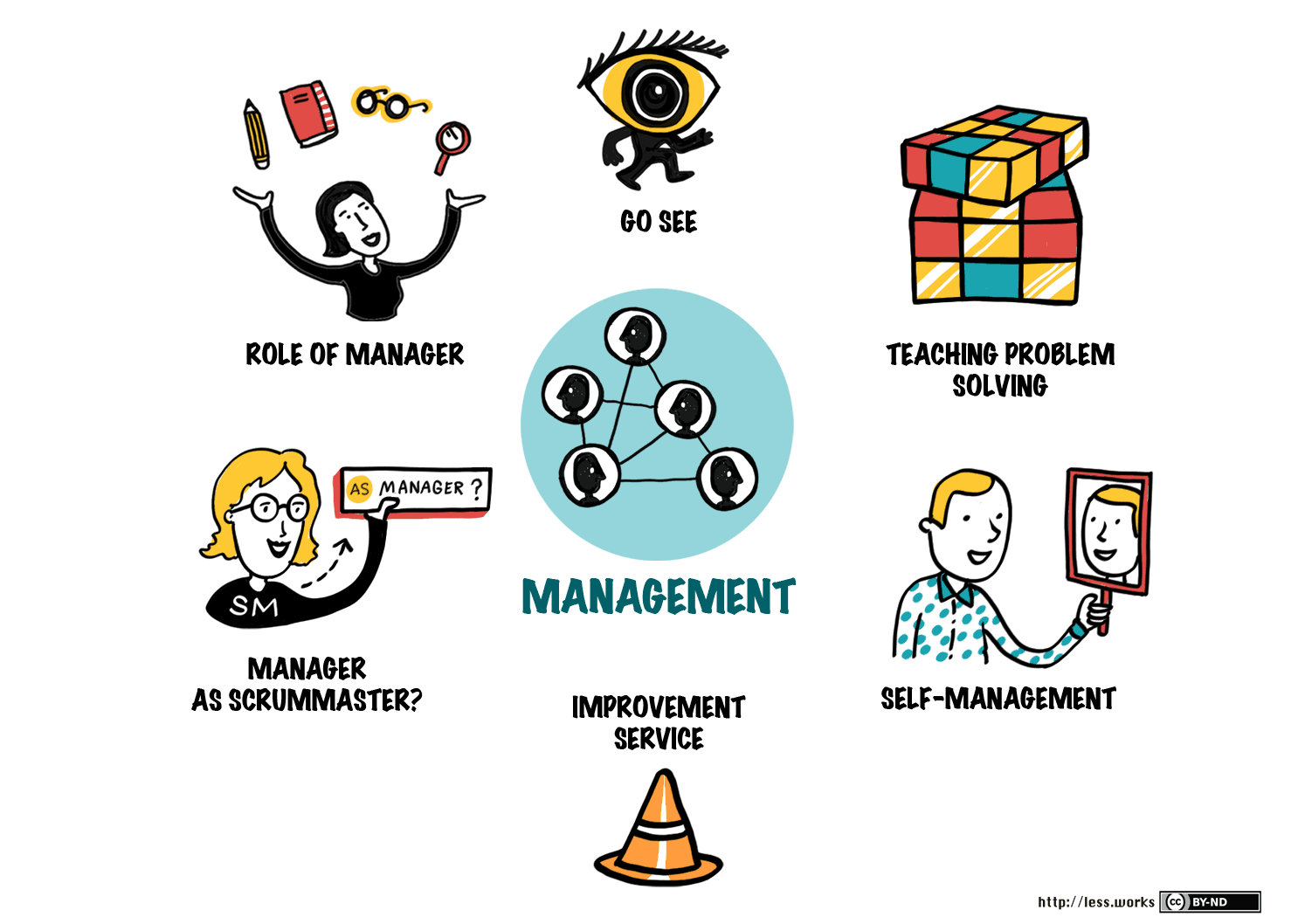
This tests whether you see scaled agile shifting management from command to enablement. A strong answer contrasts LeSS manager-as-teacher supporting self-managing teams against traditional program-management command structures.
How does management's role evolve in scaled agile frameworks like LeSS?
This tests your grasp of modern agile management, moving from command-and-control to enabling teams. Contrast Theory X (directing) with Theory Y (coaching). In LeSS, managers improve the system and teach, not assign tasks.
How Management's Role Evolves When Scaling Agile
This tests your grasp of servant leadership vs. command-and-control. A good answer contrasts traditional managers (directing work) with enabling managers (removing impediments, teaching problem-solving) as seen in LeSS.
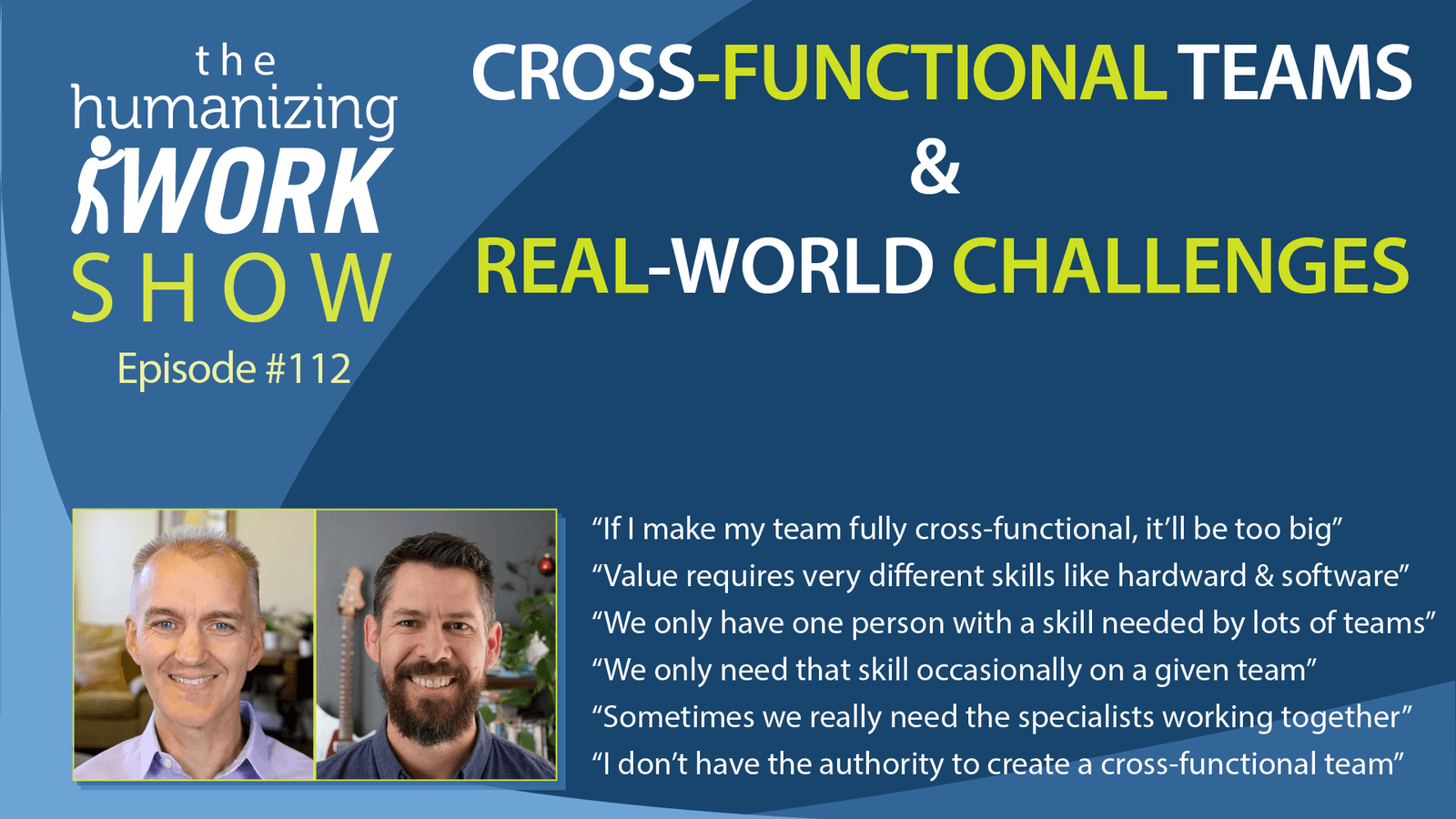
What technical and process challenges appear when forming cross-functional product teams?
Tests whether you see cross-functional integration as dissolving handoffs, not renaming teams. Strong answers mention testing in CI/CD, collective estimation, and social friction. Weak answers treat it as a staffing reshuffle that keeps siloed workflows.
Challenges of transitioning to cross-functional teams
Tests your experience with real-world agile transitions. A good answer covers process friction (new roles), technical gaps (tooling, T-shaped skills), and cultural shifts. A red flag is blaming other roles or giving textbook-only agile answers.
Challenges of Transitioning to Cross-Functional Teams?
This tests your grasp of the friction in agile transitions. A good answer covers skill gaps requiring cross-training, new process demands like CI/CD ownership, and ambiguity over responsibilities like on-call.