More in Backend Dev — page 18

How do you broadcast WebSocket messages to all clients across server nodes?
Tests WebSocket horizontal scaling and pub/sub backplanes. A strong answer names a broker like Redis, describes cross-node fan-out, and keeps connection state purely local.
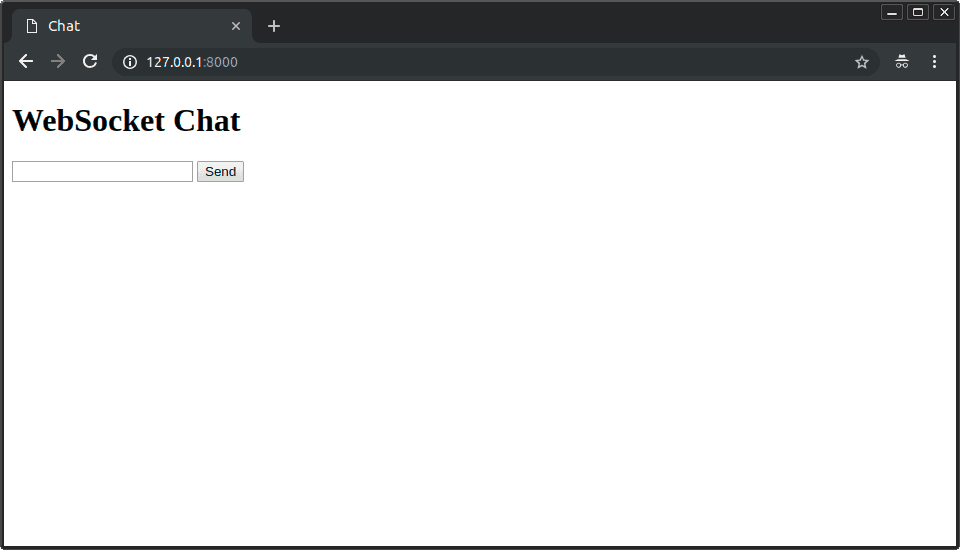
How do you authenticate a FastAPI WebSocket connection?
This tests WebSocket limits and FastAPI dependency injection. Pass the JWT via query parameter or cookie at handshake, validate it with Depends, and reject with HTTP 403 or 1008 close.
Use startup events to initialize a database pool and inject it
This tests FastAPI lifespan hooks and dependency injection for shared state. A strong answer creates the pool in an async startup handler, stores it on app.state, and accesses it via a dependency in routes. A red flag is creating a fresh pool per request.
How do you handle a WebSocket client disconnect in FastAPI?
WHAT IT TESTS: know FastAPI needs explicit cleanup for multiple WebSocket clients. ANSWER OUTLINE: cite installing websockets, Handling disconnections and multiple clients pattern, and Depends. RED FLAG: saying FastAPI auto-cleans dead sockets with no cleanup.
What are startup and shutdown events in FastAPI?
Tests app lifespan hooks and resource lifecycle. Startup creates DB pools before traffic arrives; shutdown closes them after the last request. These decorators are deprecated; prefer lifespan context managers. Red flag: per-request middleware.
How do you define a WebSocket endpoint in FastAPI?
WHAT IT TESTS: async endpoint wiring and the accept-receive-send lifecycle. ANSWER OUTLINE: import WebSocket, use @app.websocket, await accept, receive_text, then send_text. RED FLAG: forgetting accept or treating it like a standard HTTP route.
How do you directly modify FastAPI's generated OpenAPI dictionary?
Tests deep FastAPI lifecycle knowledge. Override app.openapi: save the original, call it to get the dict, mutate it, cache on app.openapi_schema, and return. Red flag: rewriting /openapi.json in middleware or touching the schema cache directly.
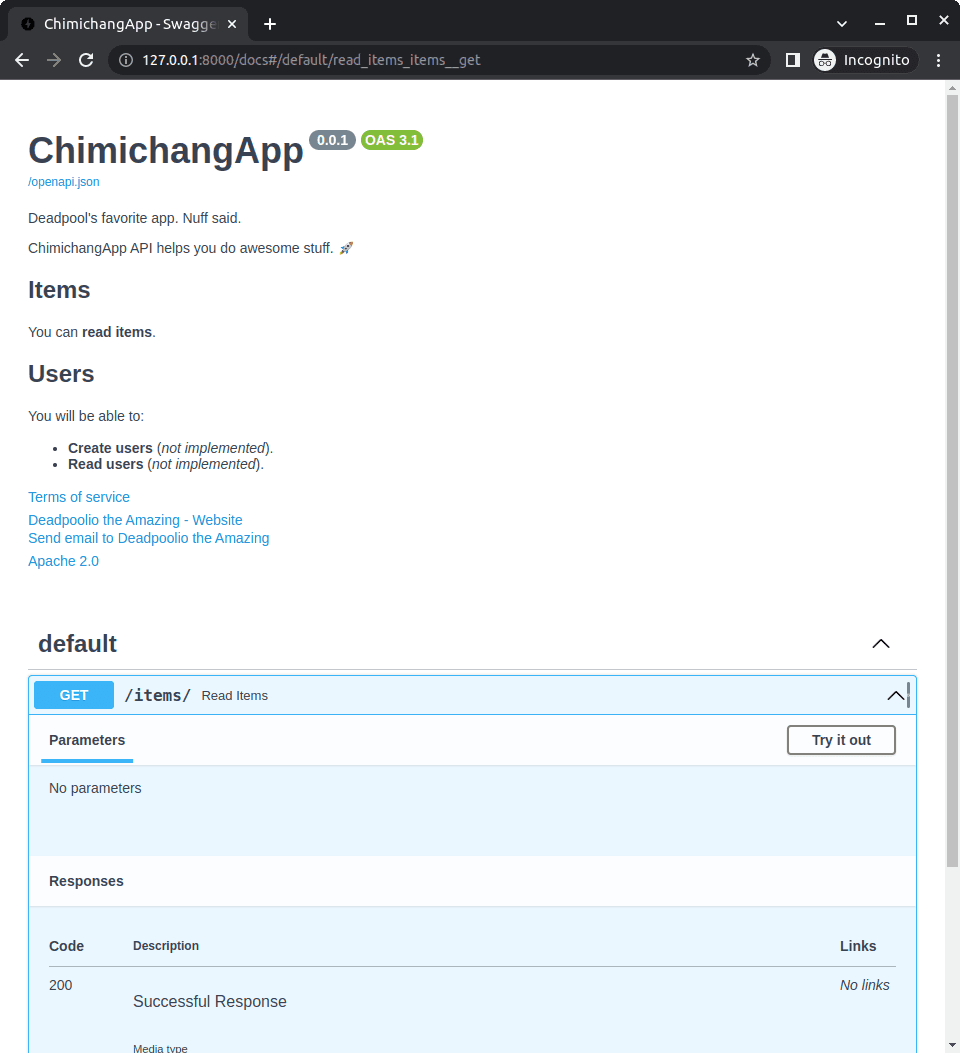
How do you disable FastAPI docs but keep the OpenAPI schema?
Tests FastAPI constructor routing: docs_url, redoc_url, and openapi_url. Answer: pass docs_url=None and redoc_url=None while keeping openapi_url="/openapi.json", gated by env var. Red flag: middleware or manual route deletion instead of native configuration.
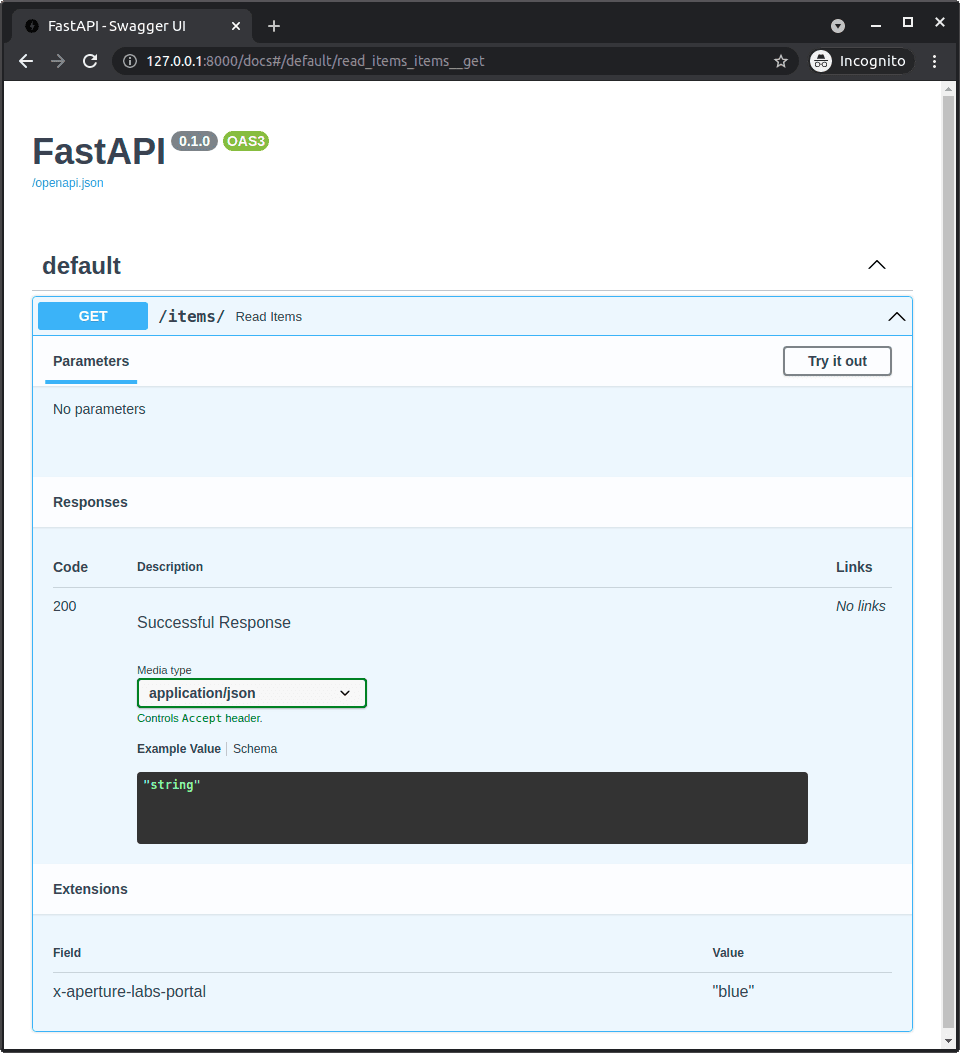
Add a custom x- field to a FastAPI path operation schema
Tests knowledge of FastAPI's built-in OpenAPI extension hook. Answer: cite the path operation decorator's extra-schema dict (OpenAPI Extra) to merge x-internal-id directly. Red flag: proposing manual JSON editing or schema post-processing.
How do you mark a FastAPI endpoint as deprecated?
This tests decorator-level OpenAPI configuration in FastAPI. Pass deprecated=True to the path operation decorator, e.g. @app.get("/old", deprecated=True), so Swagger UI shows a strikethrough. Red flag: burying a deprecation warning in the docstring instead.
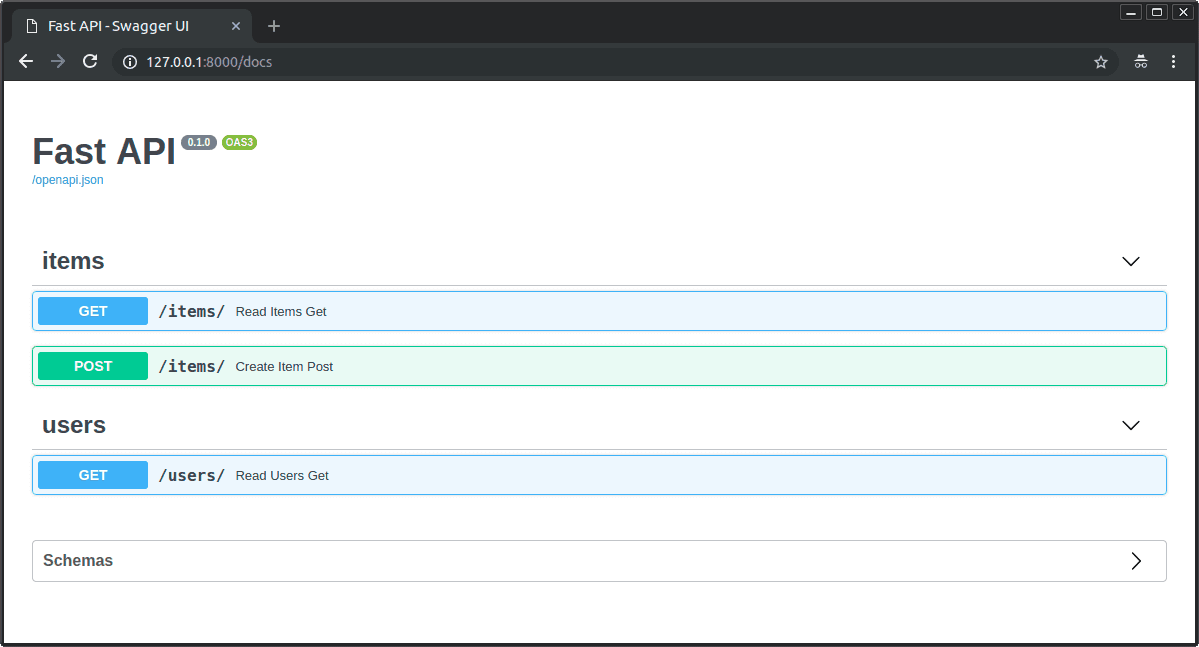
How do you group FastAPI endpoints under tags and describe groups?
Tests FastAPI's two-step tag system: decorators label routes, and openapi_tags supplies group descriptions. Good answers cover tagging paths with tags=["users"], then defining metadata in FastAPI(openapi_tags=[...]) with matching names.
How can you provide a Swagger UI example for a Pydantic body?
Tests whether you know FastAPI generates OpenAPI schema from Pydantic metadata. A strong answer names Field(example=...) for per-field samples and Body(example=...) for the full payload.
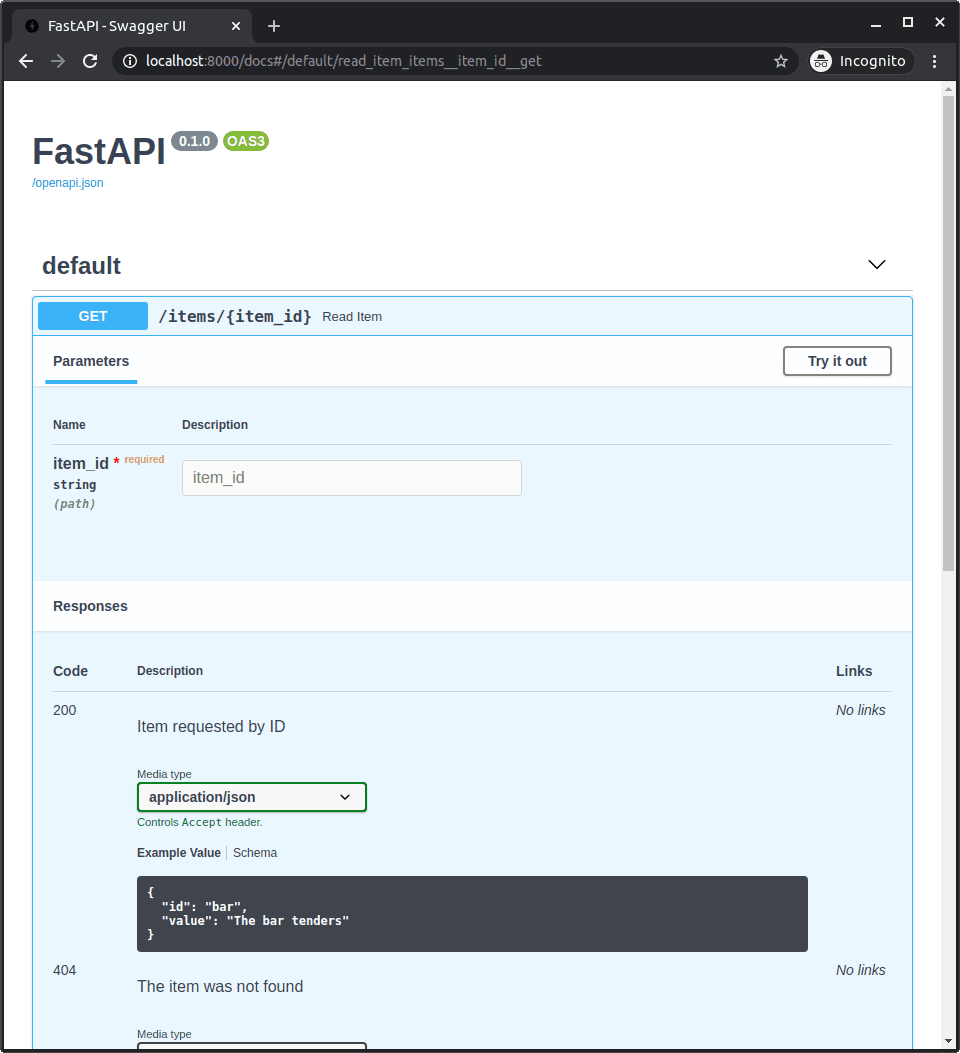
How do you document multiple response schemas in OpenAPI?
This tests FastAPI OpenAPI schema generation for error responses. A strong answer covers the decorator responses dict mapping status codes to Pydantic models and descriptions, plus manually returning JSONResponse with that code.
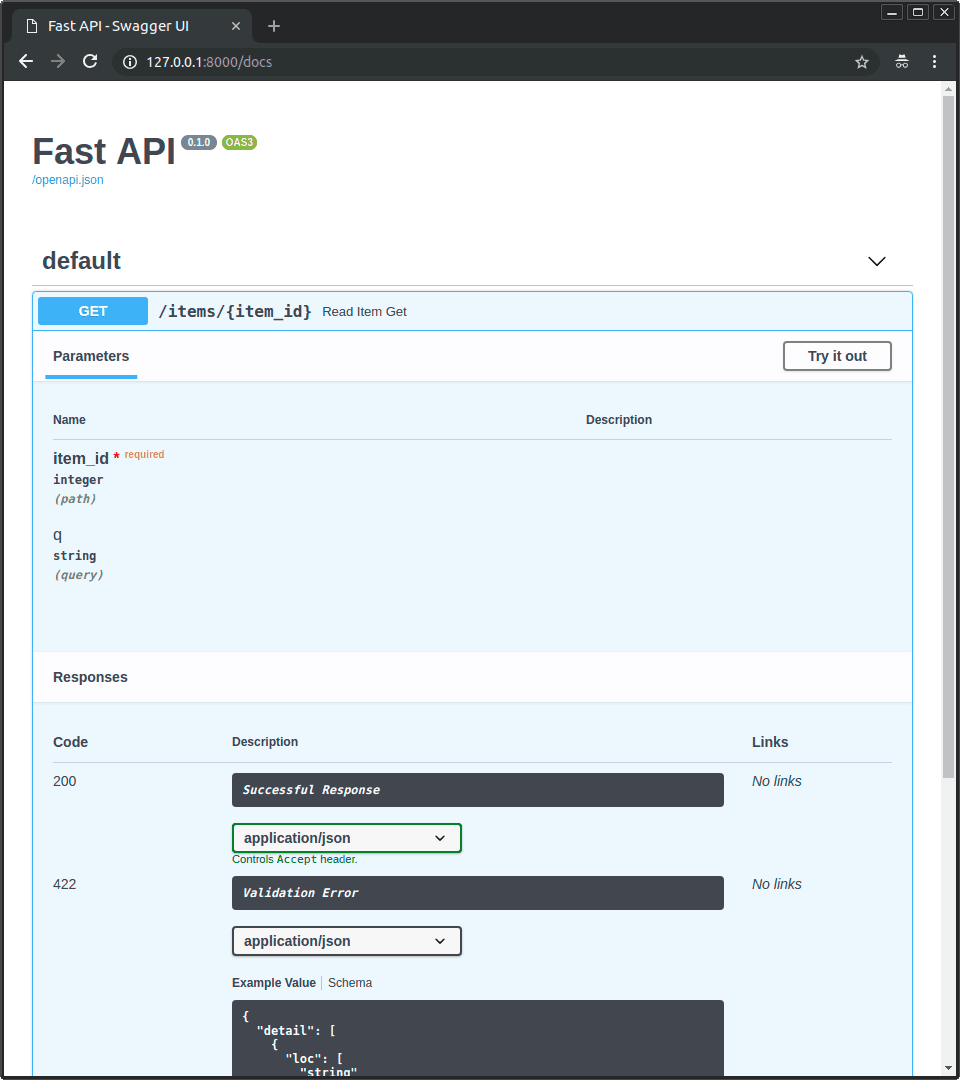
What are FastAPI's two default interactive documentation UIs and URL paths?
This tests whether you know FastAPI's built-in auto-generated docs. A strong answer names Swagger UI at /docs and ReDoc at /redoc, then notes the OpenAPI schema at /openapi.json. A weak answer confuses these with external tools or custom routes.
Add summary and description to a FastAPI endpoint for Swagger UI
This tests FastAPI path operation decorator configuration. Pass summary and description to @app.get, or use function docstring for description. A red flag is setting metadata inside the function body or confusing docs with Pydantic Field descriptions.
How do you add a title, description, and version to FastAPI auto-docs?
Tests if you know FastAPI's metadata kwargs for OpenAPI docs. Pass title, description, and version to the FastAPI() constructor; Swagger UI and ReDoc render them automatically.
How do router-level and app-level dependencies affect dependency override testing?
This tests FastAPI dependency hierarchy and test isolation. A strong answer states overrides are global to the app, so router-specific deps need scoped fixtures to prevent cross-test leaks. A red flag is claiming APIRouter has its own override registry.
How do you test a FastAPI WebSocket endpoint and lifecycle with pytest?
Tests knowledge of FastAPI TestClient usage for async WebSocket lifecycles. Use a with statement for websocket_connect; assert send, receive_json, and close; tests use standard def because TestClient handles the async app.
How do you test FastAPI background tasks are enqueued correctly?
This tests mocking framework hooks without firing side effects. A great answer: mock BackgroundTasks or override its dependency, assert add_task got the right function and payload, and test the sender separately.
How would you use pytest fixtures to manage TestClient and mock dependencies?
Tests FastAPI test isolation and dependency overrides. Strong answer: function-scoped fixture yielding TestClient, mock injection via app.dependency_overrides, and teardown cleanup to prevent state leaks.