Advanced concepts in Product Management, page 7

Platform Strategy: Solving the Chicken-and-Egg Problem
A platform isn't a product; it's an environment where groups create value for each other. This strategy is key for marketplaces (Uber) or ecosystems (iOS) where value grows with users.
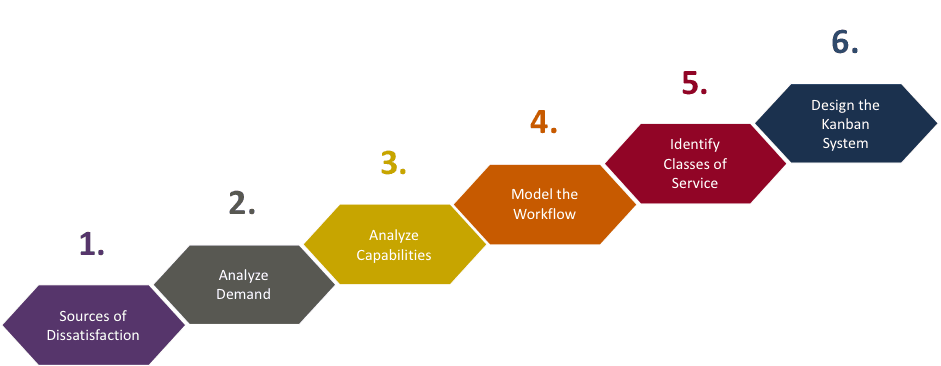
STATIK: Designing a Kanban System from First Principles
STATIK is a diagnostic recipe for designing a Kanban system tailored to your team's actual work, not just copying a template. Use it when starting a new implementation or when an existing process is stuck. The footgun is skipping the analysis.
Trust and Safety: The Immune System of Online Platforms
Trust and Safety is an online platform's immune system, protecting users from harmful content, abuse, and fraud. It's critical for moderating social media and preventing e-commerce scams.
ARIMA: Forecasting by Modeling Autocorrelation
ARIMA models forecast a time series by learning its "memory"—how past values influence the next. It's used for forecasting sales or server load where patterns are driven by internal dynamics.

Granger Causality: Forecasting, Not Causing
Granger Causality tests if one time series can forecast another, not if it causes it. It's used in econometrics to see if money supply changes predict inflation. The footgun is the name itself: it only shows predictive power, not true cause-and-effect.
Principled Negotiation: Focus on Interests, Not Positions
Principled negotiation avoids a battle of wills by focusing on shared interests, not rigid positions. It's a method for finding mutually acceptable agreements in conflicts. Use it in business deals or team disagreements.

LSTMs: Giving Neural Networks a Long-Term Memory
LSTMs give neural networks a selective memory, letting them remember important information over long sequences. This is key for language translation or time-series forecasting where old context matters.
Executive Presence: The Ability to Inspire Confidence
Executive presence is the ability to inspire confidence in your team, peers, and superiors. It's the 'X-factor' that gets you chosen for senior roles and high-stakes projects.
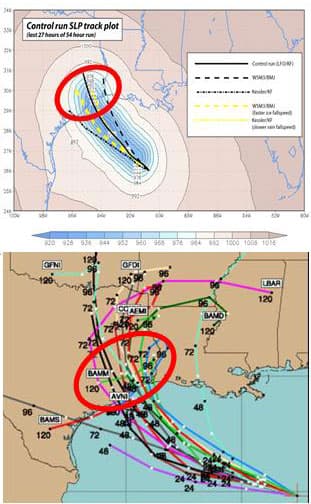
Ensemble Forecasting: Predicting with a Crowd of Models
Instead of one 'best guess,' ensemble methods generate many forecasts to map the range of possibilities. This is crucial for complex systems like weather prediction, where a single model is misleadingly precise.
Monte Carlo Forecasting: Probabilities, Not Promises
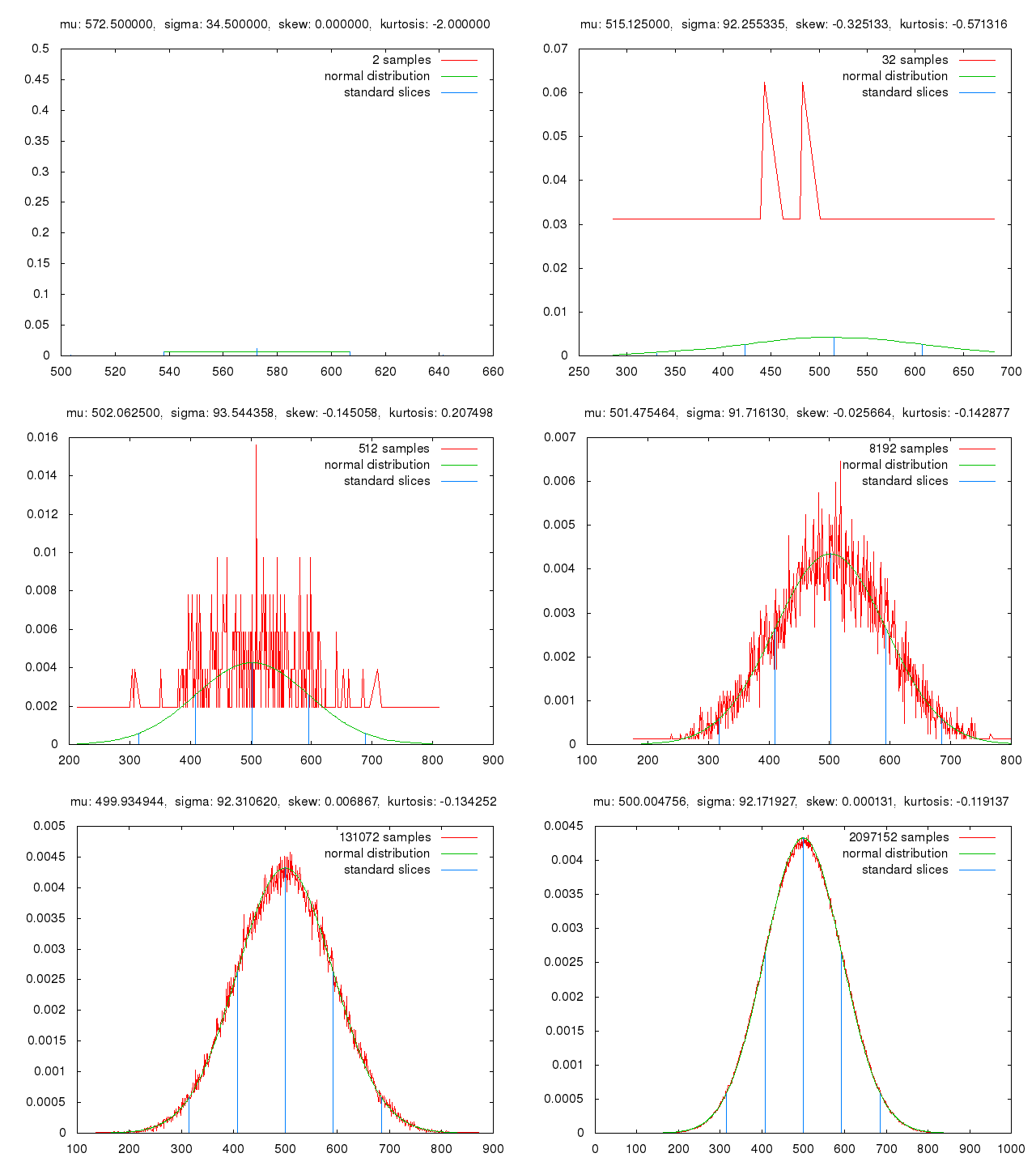
Monte Carlo forecasting trades a single due date for a set of probabilities. By running thousands of random simulations based on past performance, it generates a range of likely completion dates, not a single guess.
Principle of Charity: Argue the Strongest Case
The Principle of Charity means engaging with the strongest possible version of a colleague's argument, not the weakest. Use it in design reviews to find the best idea, not just to win the debate. The footgun is straw-manning an idea to easily knock it down.
Flow Debt: The Hidden Cost of Workflow Inefficiency
Flow Debt is the invisible cost of process bottlenecks that slow down delivery. It shows up as work waiting for handoffs, reviews, or decisions. The footgun is blaming individuals for system-level delays instead of optimizing the workflow itself.
Lean Portfolio Management (LPM): Connecting Strategy to Execution
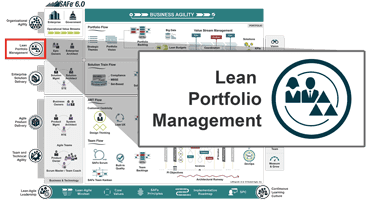
LPM connects strategy to execution by applying Lean thinking to funding and governance. It manages a portfolio of development value streams—like an e-commerce site—to ensure work aligns with business goals.
Marketing Mix Modeling (MMM): Isolating Marketing's Impact on Sales
Marketing Mix Modeling (MMM) statistically links aggregate marketing efforts to sales outcomes over time. It's used to determine the ROI of past campaigns, like a TV ad blitz. The main footgun: the model is only as good as the historical data you feed it.
Solution Train: The Train of Agile Trains
A Solution Train is a 'train of trains,' coordinating multiple Agile Release Trains (ARTs) to build one massive product. It's used for complex systems like autonomous vehicles where many teams must align.
Business Analytics vs. Business Intelligence
Business Analytics predicts the future and prescribes actions, while Business Intelligence describes the past. BI reports last month's sales; BA forecasts next month's demand.
LeSS Huge: Scaling Scrum Beyond Eight Teams
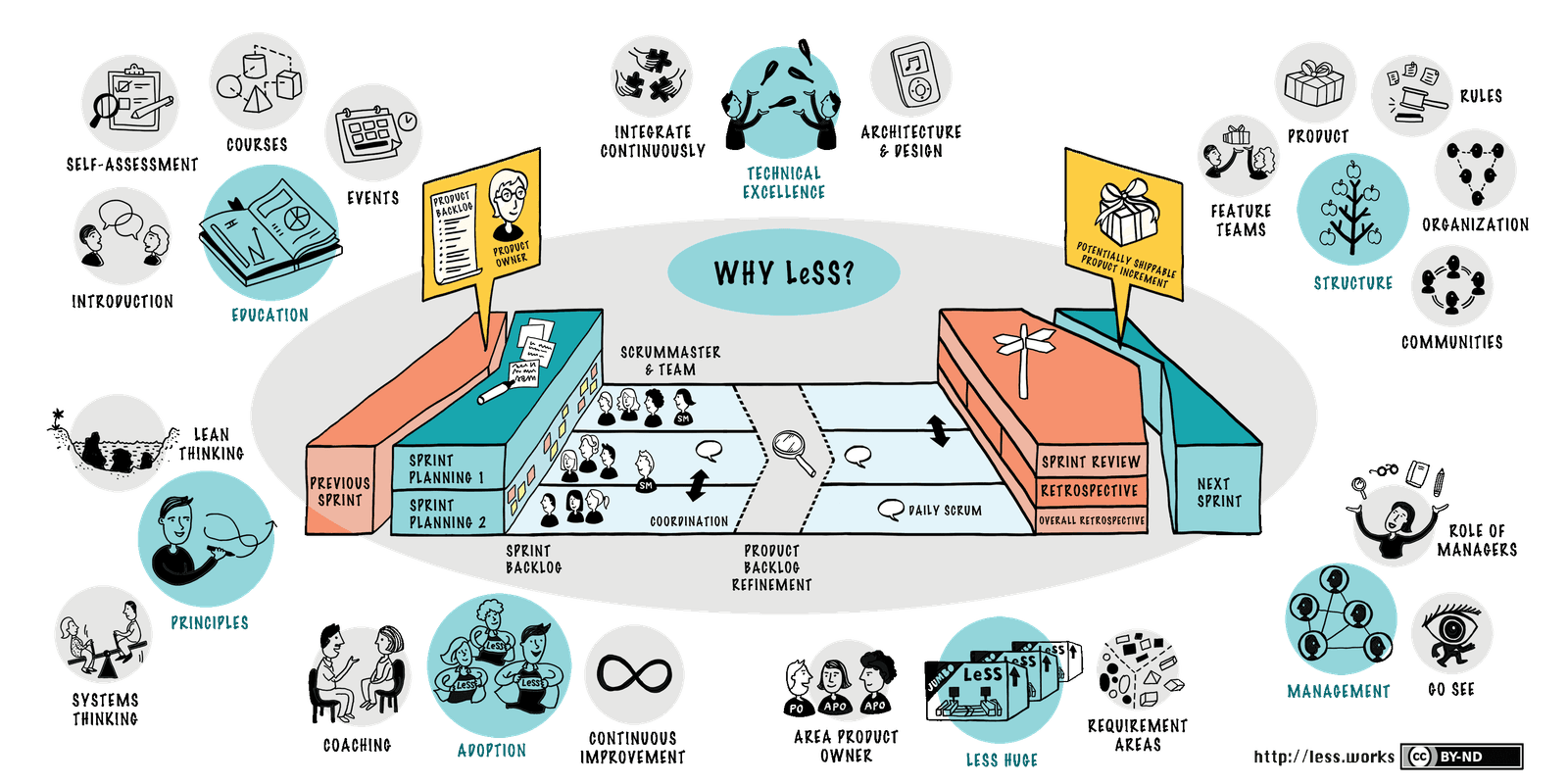
LeSS Huge is a framework for applying Scrum when over eight teams work on one product, organizing them into "Requirement Areas." It’s for massive projects, like autonomous driving systems, where dozens of teams must coordinate.
Workforce Analytics: Data-Driven People Decisions
Workforce Analytics applies systematic data analysis to people-related decisions, moving beyond gut feelings for hiring and promotions. It's used to predict turnover or measure training ROI.
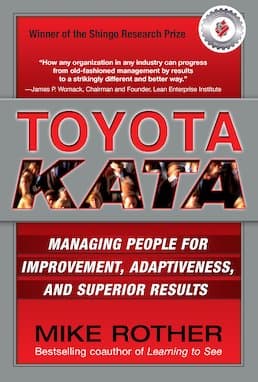
Toyota Kata: The Practice Routine for Continuous Improvement
Think of Toyota Kata as a daily workout for your team's problem-solving muscles. It provides a structured routine to move from a current condition to a target condition via rapid, small experiments.
Apache Kafka: A Distributed Log for Data Streams
Think of Kafka as a durable, append-only log for events, not just a temporary message queue. It excels at handling high-throughput, real-time data feeds for analytics or log aggregation. The footgun is treating it like a simple broker, leading to data loss.
We are hiring for this. Every open role lists the topics its interview covers, so you can prepare for the real thing rather than guessing.
See open roles