Everything in UX Research, page 13
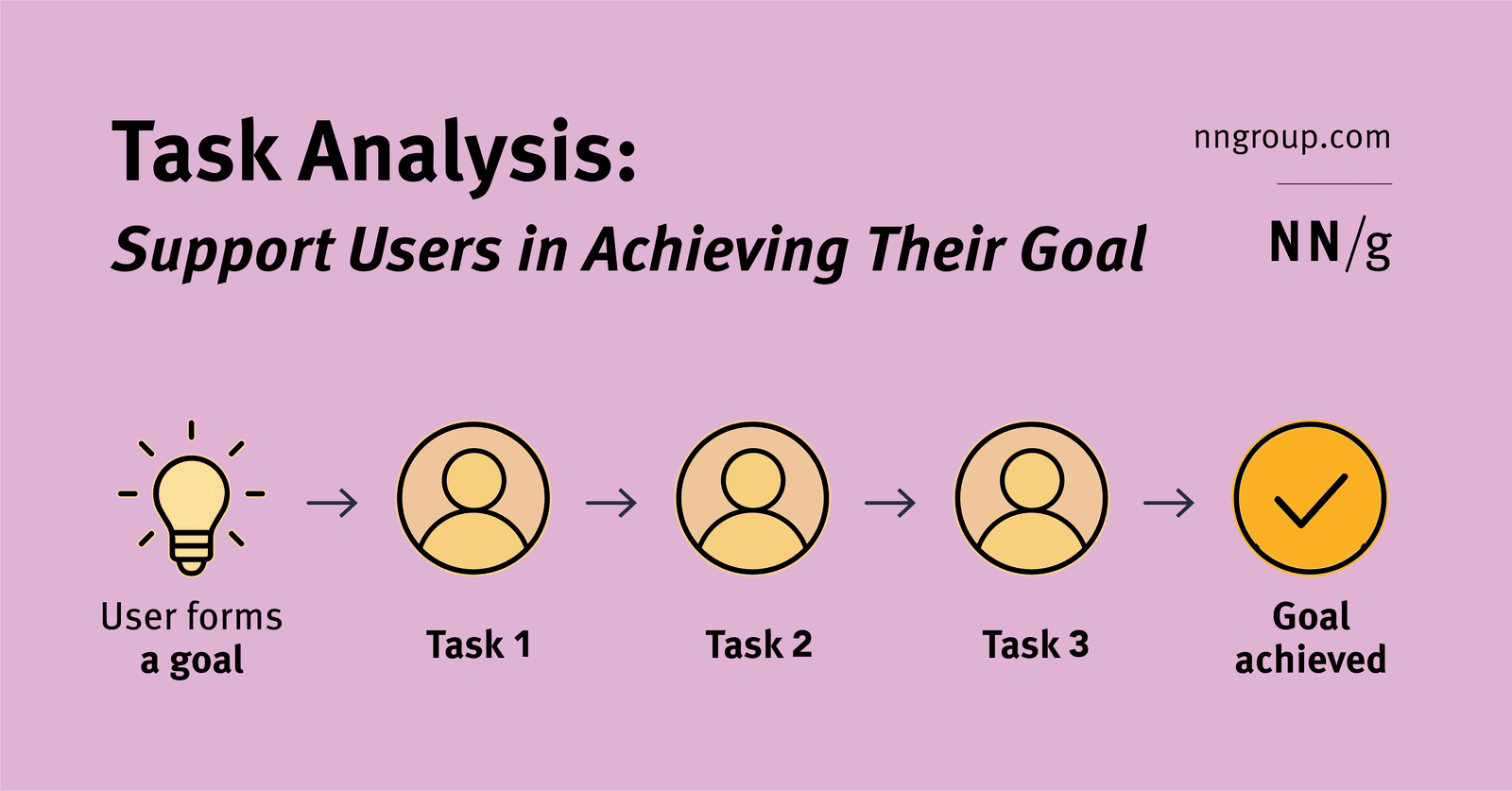
Task Analysis: Mapping User Goals to Actions
Task analysis maps the specific actions (tasks) a user takes to achieve their larger objective (goal). It's used to ensure a product actually helps users, not just creates busywork. The key mistake is designing for the task instead of the user's true goal.
Think Aloud Protocol: Hear Your User's Inner Monologue
See your product through a user's eyes by having them narrate their thoughts live during a task. It's used in usability testing to uncover confusion, mismatched expectations, and the "why" behind clicks.
Cultural Probes: Inspire, Don't Analyze
Cultural probes are like a creative care package for users, designed to capture inspirational moments, not to collect analyzable data. They help designers understand a user's world and values early in a project.
User Mental Models: What Users Believe About Your System
A user's mental model is their internal story of how your system works, based on belief, not facts. It shapes every interaction, from predicting button actions to checkout flows.
Participatory Design: Designing With, Not For, Users
Participatory design means designing *with* users as co-creators, not just *for* them. It's used in software, architecture, and urban planning to ensure the final product truly fits the community.
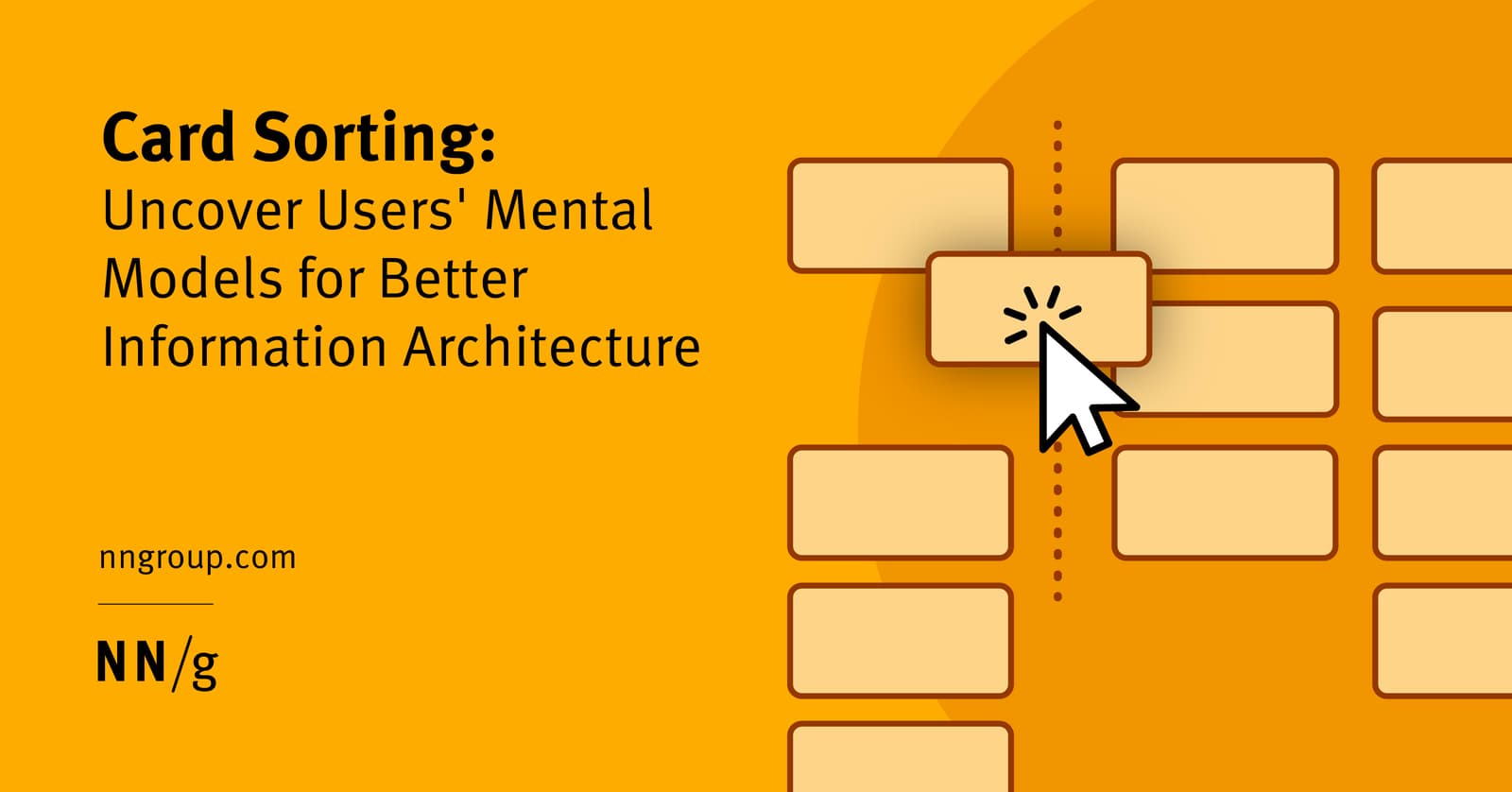
Open Card Sorting: Map Your User's Brain
Open card sorting reveals how users mentally group your content. You give them topics on cards and ask them to sort them into groups they create and name. It's ideal for designing intuitive navigation.
Semi-Structured Interviews: Uncover User Needs Through Conversation
A semi-structured interview is a guided conversation, not a rigid script, to uncover the 'why' behind user needs. Use it in discovery to define problems before designing.
UX Research Incentives: How Much to Pay Participants
Think of research incentives as an investment in data quality, not just a cost. For a 60-minute interview, budget $75-150 for consumers or $200-500 for specialists. The footgun is underpaying: you'll get poor data and waste everyone's time.
Snowball Sampling: When Your Users Find Your Users
Snowball sampling has your first participants recruit the next ones from their network. It's vital for reaching hidden groups, like specific professional communities. The footgun is selection bias: you're sampling social networks, not the whole population.
Recruiting from a Customer Research Panel
Think of a customer research panel as your on-call list of users who've agreed to give feedback, making recruiting fast and cheap. Use it for a steady stream of participants for frequent studies.
Longitudinal Study: Watching Change Over Time
Think of it as a movie, not a snapshot. A longitudinal study tracks the same users over time to see how behavior evolves, revealing cause and effect. It's used to measure long-term feature adoption or churn.
Pilot Studies: A Dress Rehearsal for User Research
A pilot study is a dress rehearsal for your user research. You run 1-2 practice sessions to find flaws in your study design, not the product. It's crucial for remote tests or high-stakes projects.
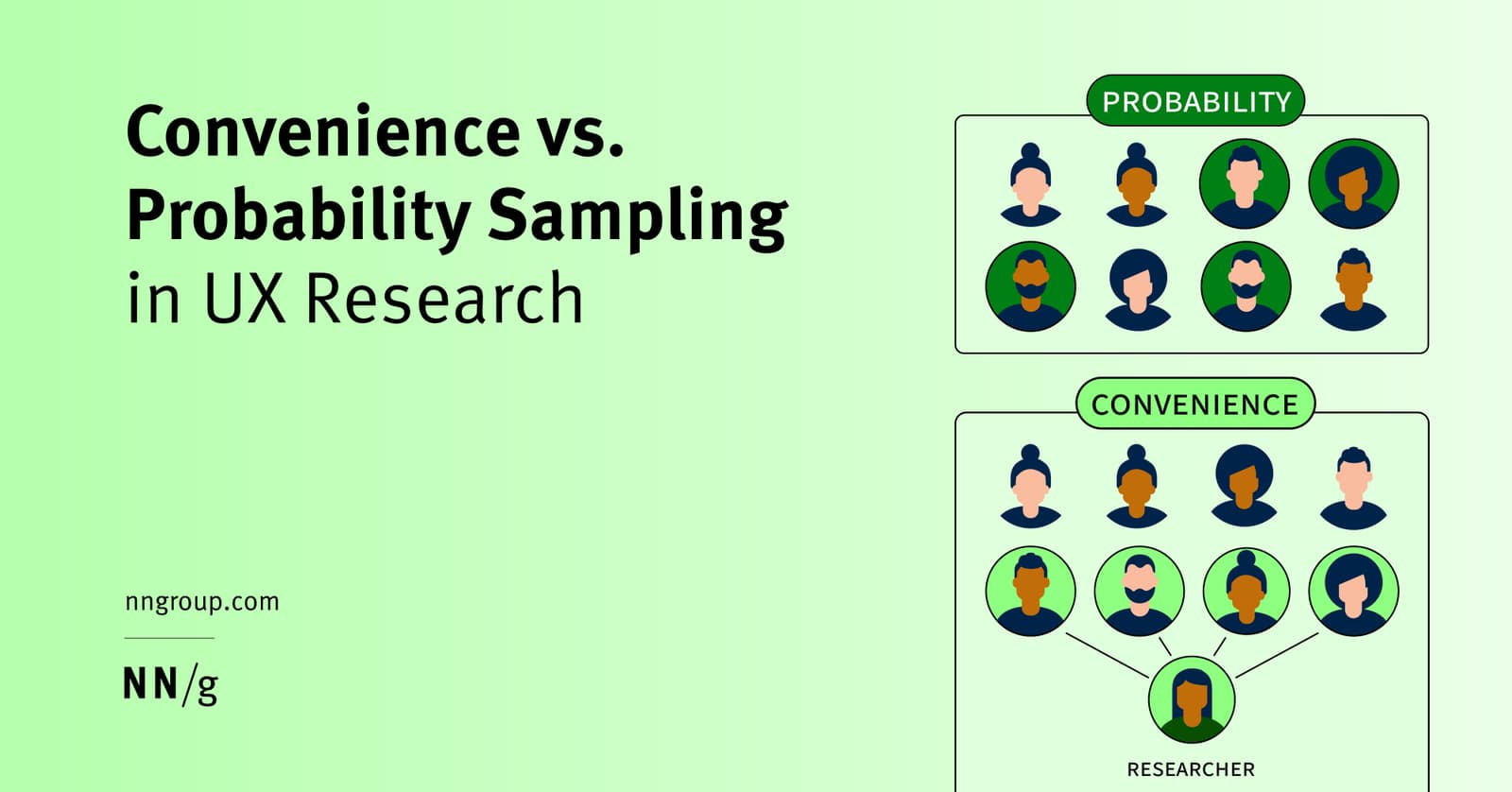
UX Sampling: Convenience vs. Probability
Convenience sampling is fast and cheap—ask whoever is easy to reach. Probability sampling is rigorous—ask a random slice of your population. Use convenience for quick usability tests, but probability for high-stakes decisions.

How to Choose a UX Research Method
Map your research question to a 3D space: what people say vs. do (attitudinal vs. behavioral), and direct observation vs. indirect measurement (qual vs. quant). This helps you select the right tool, from surveys to A/B tests.
Screener Surveys: Your Filter for Valid User Research
A screener survey is your filter for finding the right research participants. It ensures your study includes representative users, not just anyone, by asking questions about their behaviors and demographics.

Research Hypothesis: A Testable Bet on Reality
A research hypothesis is a testable bet about user behavior, not just a guess. It frames A/B tests by turning an observation into a statement you can prove or disprove. The footgun is confusing it with a theory; a hypothesis is a starting point, not.
Research Objectives: From 'What If' to 'What to Test'
Research objectives translate vague business worries into specific, testable questions about user behavior. They are the blueprint for your study, ensuring you test what matters.

UX Research Questions: The 'Why' Before the 'What'
A research question is your study's North Star—the high-level "why" you're conducting research, not a question you ask users. Before writing an interview guide, define these to keep your study focused.
Deception: The Core Concept
Deception is the act of convincing someone of untrue information that the sender knows is false. It's often done for personal gain and relies on the receiver's lack of knowledge about the truth.

GDPR for UX Research: Beyond the Consent Form
GDPR forces you to treat user data with respect: collect only what you need for a specific purpose and keep it safe. It applies to all research involving personal data from EU residents. The biggest footgun is collecting data "just in case."
We are hiring for this. Every open role lists the topics its interview covers, so you can prepare for the real thing rather than guessing.
See open roles